Learning English can feel difficult when you focus only on grammar rules and vocabulary lists. However, one of the most natural and effective ways to improve your language skills is to learn English through stories. Story-based learning allows you to understand how the language works in real-life contexts while keeping you engaged and motivated.
Among all types of reading materials, classic books stand out as one of the best tools for language learning. Their structured storytelling, rich vocabulary, and timeless themes make them ideal for learners at every level.
Why Learning English Through Stories Is Effective
When you learn English through stories, you are not just memorizing words—you are experiencing the language in action. This method helps your brain connect words with meaning, emotion, and context.
Stories provide a natural flow of language. Instead of learning isolated words, you see how sentences are formed, how ideas are expressed, and how conversations unfold. This makes it easier to understand and remember what you read.
Another important benefit is engagement. Stories capture your attention, making learning feel less like studying and more like entertainment. When you enjoy what you read, you are more likely to stay consistent, which is the key to improvement.
What Makes Classic Books Ideal for Learning English
Classic books are especially powerful when you want to learn English through stories because they offer several unique advantages.
First, they use well-structured language. Unlike modern slang-heavy content, classic literature follows clear grammar rules and proper sentence formation. This helps learners build a strong foundation in English.
Second, many classic stories are already familiar. Books like Alice in Wonderland or The Wonderful Wizard of Oz are known worldwide. When you already understand the storyline, it becomes easier to focus on language learning instead of trying to follow a complex plot.
Third, classic books introduce rich vocabulary. They expose you to a wide range of words and expressions that improve both your reading and writing skills.
Finally, they are timeless. These stories have remained popular for generations, which means they are reliable and effective learning tools.
Best Classic Books to Learn English Through Stories
Choosing the right books can make a huge difference in your learning journey. Below are some of the best classic books to help you learn English effectively.
Alice in Wonderland
This is one of the best books for beginners. The language is simple, and the story is imaginative and fun. It helps you build basic vocabulary while enjoying a creative narrative.
Grimm’s Fairy Tales
These short stories are perfect for beginners and intermediate learners. The repetitive structure and familiar plots make it easier to understand new words and phrases.
The Adventures of Sherlock Holmes
This book is ideal for intermediate learners. It introduces more advanced vocabulary and real-life dialogue, helping you improve comprehension and critical thinking.
The Time Machine
A great choice for learners who want to explore slightly more complex language. It introduces scientific terms and descriptive writing.
How Dual Language Books Make Story Learning Even Better
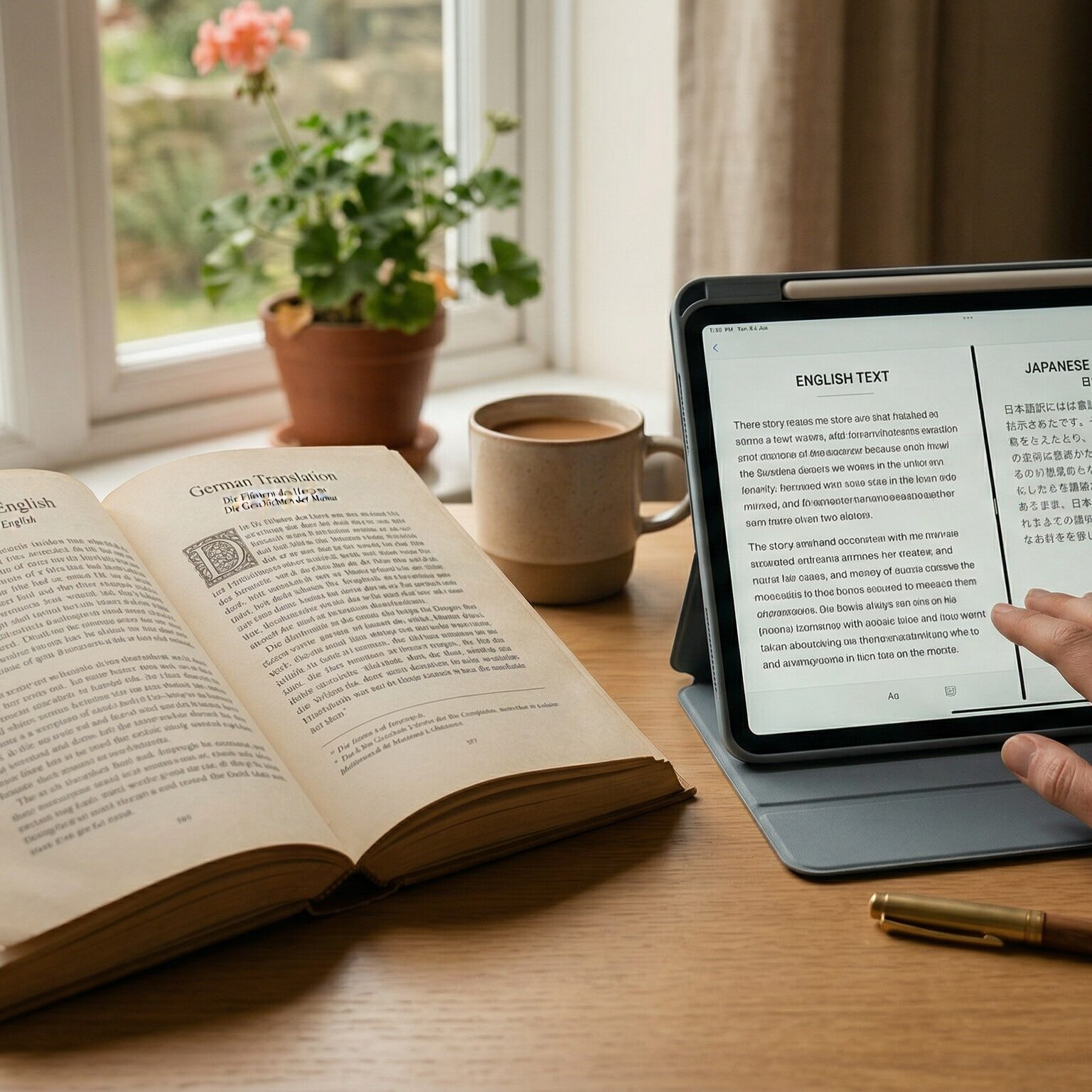
If you want to maximize your progress, combining stories with dual language formats is highly effective. Dual language books allow you to read English alongside your native language, making it easier to understand difficult words and phrases.
This method helps you stay focused without constantly using a dictionary. You can quickly check meanings and continue reading, which keeps your learning smooth and enjoyable.
Dual language books are especially useful for beginners and intermediate learners who need extra support while building confidence.

Tips to Learn English Through Stories Faster
To get the best results from story-based learning, you should follow a simple and consistent approach.
Start by choosing books that match your level. Reading something too difficult can be discouraging, while overly simple texts may not challenge you enough.
Try to read daily, even if it is only for 15 to 20 minutes. Consistency is more important than long study sessions.
Focus on understanding the overall meaning instead of translating every word. This helps you think in English rather than relying on your native language.
Re-read stories you enjoy. Each time you read the same text, your understanding improves, and your reading speed increases.
You can also read aloud to improve pronunciation and speaking confidence.
Ebook vs Physical Books: Which Is Better?
Both formats have their advantages, and the best choice depends on your learning style.
Physical books are great for focused reading without distractions. They help you stay immersed in the story and improve concentration.
Ebooks, on the other hand, offer flexibility and convenience. You can carry multiple books on one device and read anytime, anywhere. For learners who want access to a wide range of titles, ebook subscriptions are a practical and affordable solution.
With a low-cost subscription, you can explore multiple classic books without buying each one individually, making it easier to stay consistent in your learning journey.
Final Thoughts
If you want a natural and enjoyable way to improve your language skills, the best approach is to learn English through stories. This method combines entertainment and education, making it easier to stay consistent and motivated.
Classic books provide the perfect balance of simplicity, structure, and engaging storytelling. When combined with dual language formats, they become one of the most powerful tools for language learning.
Whether you are a beginner or an advanced learner, reading stories can help you build confidence, improve fluency, and develop a deeper understanding of English.
Try our vocabulary app free: Click here
 Side-by-Side Classics